Playa Bowls Chapel Hill
Systems Analysis | Contextual Inquiry
Undergraduate Class Project - INLS 582: Systems Analysis @ UNC Chapel Hill
Proposed a system redesign based off of observations and validated models to improve system function.
Project Overview
My team and I conducted a comprehensive evaluation of Playa Bowls Chapel Hill (PBCH) to understand how organizational processes, technology, and customer experience intersect within a franchise environment. This project focused on identifying opportunities to improve operational efficiency, employee workflow, and improving communication through all levels of the organization to improve store function. We conducted a total of 5 contextual inquiries with employees at PBCH at various levels of management. Through these contextual inquiries we created an affinity diagram with themes found throughout our inquiries, as well as communication, cultural, artifact, and physical space models. Additionally, we ran a survey for customers using SurveyMonkey to gain an understanding of costumer’s thoughts and feelings on PBCH. The survey gathered a total of 42 responses, in which we gathered that a majority of those who filled the survey were “satisfied” or “very satisfied” with their experiences at PBCH. We had both a store manager as well as the store owner validate our findings before coming up with several stratefic recommendations to enhance both internal and customer-facing systems. With our findings, we proposed to implement a standardized workflow for employees, establish a formal form of communication between employees and management, and create a standardized training checklist for new employees.
This project strengthened my skills in systems thinking, stakeholder analysis, and organizational diagnostics, while allowing me to apply theoretical concepts to a real-world business setting. It also deepened my understanding of how local franchise operations can adapt system improvements to align with both brand standards and unique community needs.
Role:
Project Owner, Interviewer, Stakeholder Coordinator,
Workflow analyzer
Team:
Cindy Xu
Michael Husley
Leo Bautista
Kate Phillips
Jaegoo Ha
Timeframe:
Sept. 2024 - Dec. 2024
System Description
Playa Bowls began as a small acai bowl stand on the side of the beach in New Jersey. What started as a small stand on the beach soon turned into over 200 stores nationwide, whose mission remains to live their brand through the actions and relationships that they make in their communities. Playa Bowls offers a wide range of products, ranging from acai bowls and smoothies, to oatmeal and coffee, and just recently opened a location in Chapel Hill, NC in August, 2024.
Project Objectives
The primary objective was to identify PBCH’s current likeness from their customers, in which a majority comes from the UNC student population, and find any means of improvement for efficiency and/or processes of operations at the store in order to boost PBCH’s reputation among UNC’s student population. After discussing some parimeters and scope of the project, the owner and I decided that our primary goal was to utilize a system analysis approach of the store and its operations as a whole in order to assess and identify any problems that have arrisen after the store opening in order to address any issues early into the store’s operation. Recognizing that UNC students are a vital part of the ecosystem and economy of Chapel Hill, I was requested to look into ways that PBCH could improve efficiency, profitability, and forge a stronger connection with UNC and Chapel Hill. This outcome was achieved by:
● Identifying at least three (3) areas of improvement cited by staff or students through interviews or surveys.
● Designing an implementable system to improve these identified areas.
The first step after our team was formed was to come up with a team name, which we ever so cleverly decided on “A-Playa-Bowl Solution”. After that, we determine our roles and meeting times for the rest of the semester. As project owner, I was the main point of contact between our team and PBCH, and was in charge with communications between us and the owners, managers, and employees to schedule meetings and interviews. We followed a Scrum framework with one week cycles. While all of us would conduct contextual interviews, I was in charge of obtaining artifacts as an employee at PBCH. Other responsibilities I took on included organizing our final affinity diagram, creating the physical space model, and delivering all physical deliverables to the owners of PBCH.
Role Assignment
Information Gathering Needs
Our team first wanted to define the parameters of exactly what information we need to gather from our contextual inquiries. After communicating with the store owner, our team came up with eight information needs to target our interview questions with PBCH staff:
What is frustrating?
How is work delineated?
Seasonal calendar information
What is the catering system?
Their opinion/relationship with management
Different shifts requirements
System for downtime
Disconnection of employers to employments
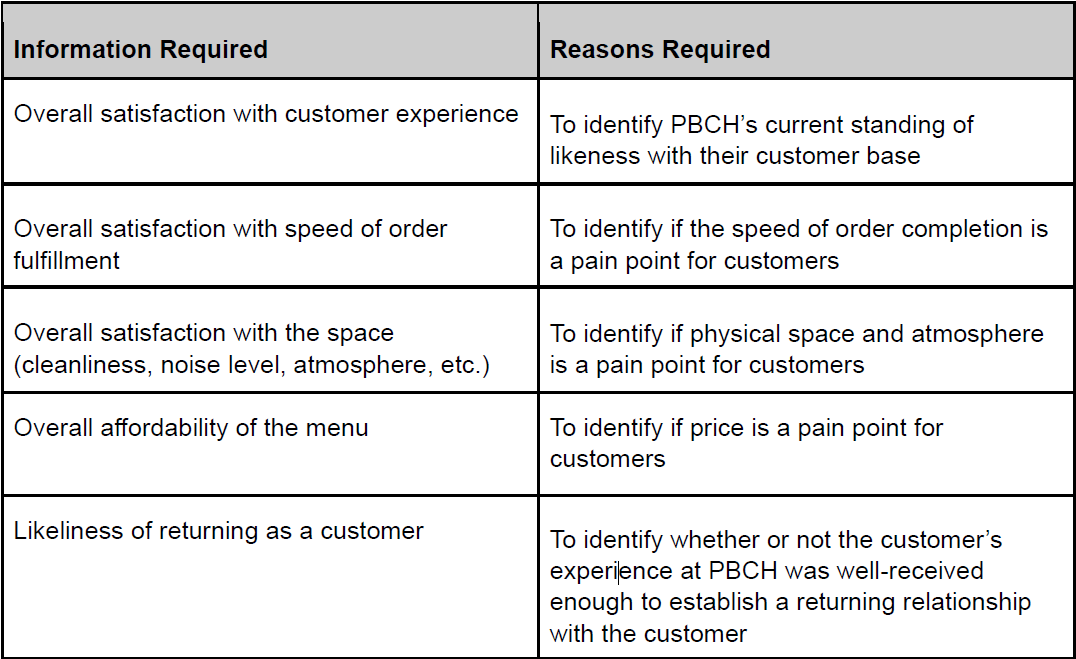
Additionally, we ran a 6-question survey on SurveyMonkey passively while we conducted our staff interviews in order to understand the customer perspective. Customers were to scan a QR code and complete said survey for the chance to win a $20 Playa Bowls gift card. While our survey was active, we accumulated 42 responses. The survey went live on the 31st of October, 2024 and closed on the 7th of November 2024. Our specific information needs from the surveys were as follows:
Survey Results
88% of customers reported a “Very satisfied” or “Satisfied” rating of their overall experiences and 8% being dissatisfied
80% of customers reported a “Very satisfied” or “Satisfied” ratings for speed of order fufillment, leaving 12% “Dissatisfied” or “Very dissatisfied” and 8% “Neither satisfied nor dissatisfied.” Comments indicated that while that despite longer wait times, they were still satisfied with the items themselves.
96% of customers reported a “Very satisfied” or “Satisfied” for space satisfaction, with only 4% indicating a “Dissatisfied” rating, with comments complaining about not being able to find seating at times.
When asked about affordability, 36% indicated a “Very satisfied” or “Satisfied” rating, with 32% indicating they were “Dissatisfied” or “Very dissatisfied.” 32% indicated that they were “Neither satisfied nor dissatisfied” leaving pricing to be the question with the most polarizing responses.
Lastly, when asked if customers would return to PBCH, 92% indicated they were “Very likely” or “Likely” to return, with 8% indicating they were “Unlikely” or “Very unlikely” to return, leaving most customers with an experience at PBCH that was well-received enough to establish a returning relationship.
Contextual inquiries, contextual inquiries, and more contextual inquiries.
We conducted a total of five contextual inquiries over a 5-week period. The contextual inquiries were conducted at different times of operation. Additionally, the contextual inquiries were conducted with employees at varying levels of hiearchy within the PBCH system.
Our team divided into two groups in order to complete these. One person was designated as notetaker for interviews and observations while the other was designated as the interviewer.
These contextual inquires acted as the heart and soul of our project. We collected almost all of our qualitative data from these contextual inquiries in order to create our models and affinity diagram.
The Motherload: The Affinity Diagram
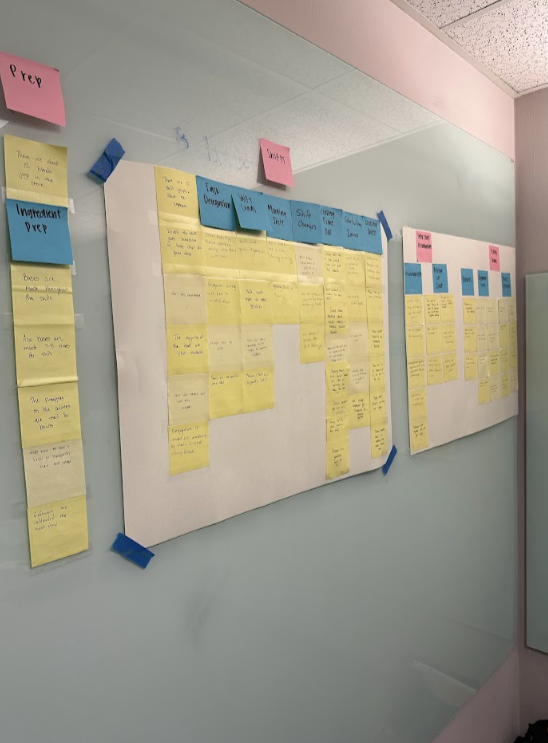
The following affinity model was created using quotes from all five interviews conducted. Our affinity model consisted of roughly 205 notes separated into 37 subcategories and 12 overarching categories listed in a chronological order:
Prep, Shifts, Inter-Staff Relationships, Filling Orders, Use of Time, Ordering/Use of Space, Management, Training, Catering, Grand Opening Issues, Branding, Customer Experience.
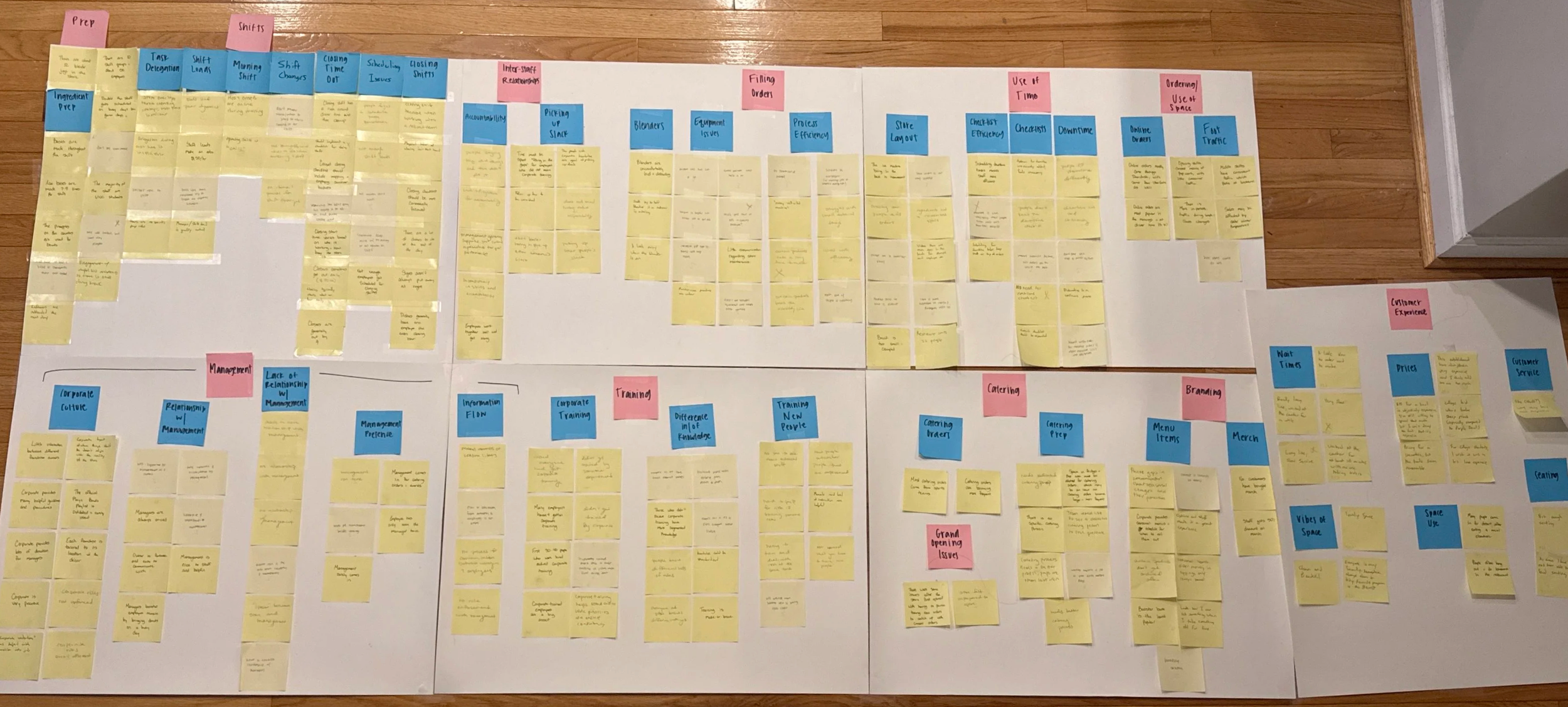
Our original affinity diagramming session took approximately two hours in order to create our identify our initial themes and patterns and organize them into our final affinity diagram. From the affinity model, we were able to identify relationships between the 12 overarching categories and how each category interacted within system. Through this, we were able to see the larger issues that our interviews cited, and develop recommendations for a new system based on the affinity diagram. Specifically, our larger categories in our affinity diagram included Management, Shifts, Training, and Use of Time.
From our contextual inquiries, we decided that the following models would best represent our findings with the system:
Artifact Model
Our Models
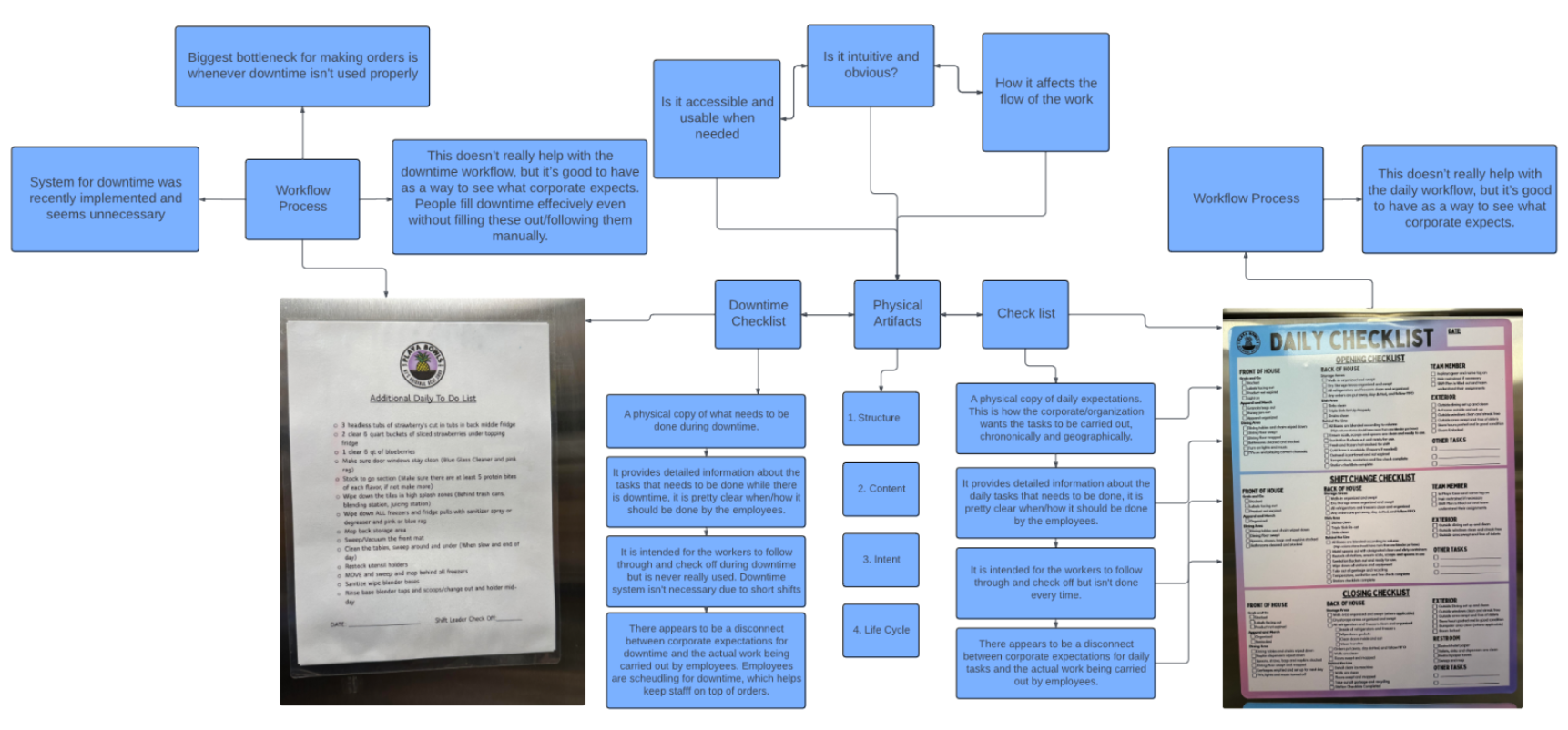
In our time in the store, our team found two checklists: a larger one created by corporate and a smaller one created by the managers of PBCH.
Our group found that while the smaller checklist provides clear information about tasks to be performed during downtime, it is also clear that employees do not physically check off anything from either checklist, and has been cited through interviews that many employees don’t even know of its existence. Thus, there appeared to be a disconnect in expectations from corporate and employees regarding daily task expectations.
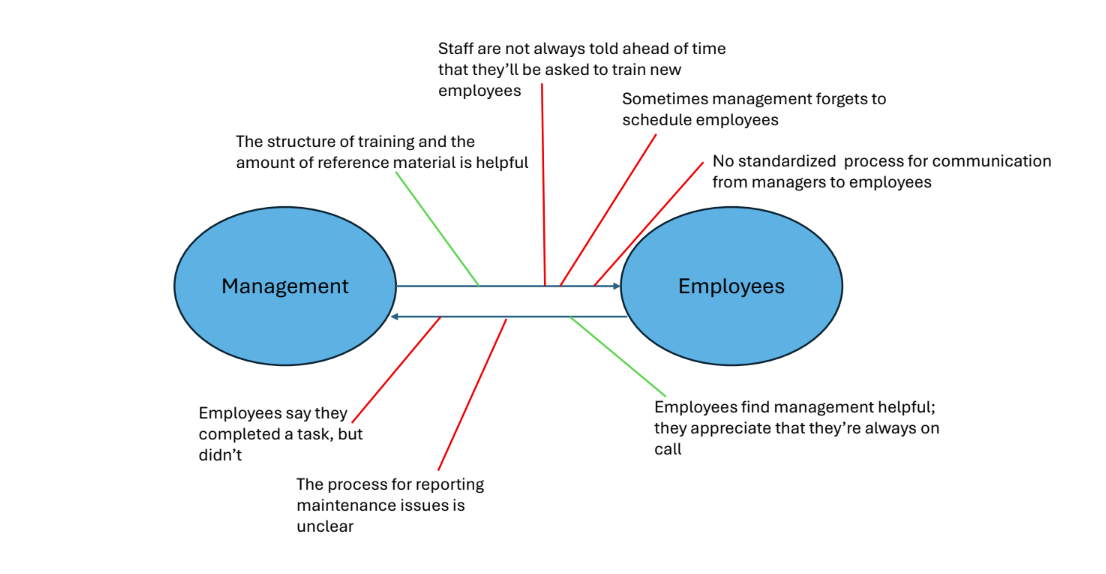
Communication Flow Model
A communication flow model was created to due constant referral to a break in communication between employees and managers at PBCH, which was deemed an issue with the system from the interviews conducted.
There seemed to be a communication gap between management and employees at PBCH as gathered from the interviews. Staff are not always told when new employees are coming in and requiring training, and sometimes management forgets to schedule employees. Overall, there seemed to not be a standardized or structured process for management to communicate with employees. Processes such as reporting maintenance issues were unclear and employees often falsely reported tasks being completed to management, signaling another large communication gap.
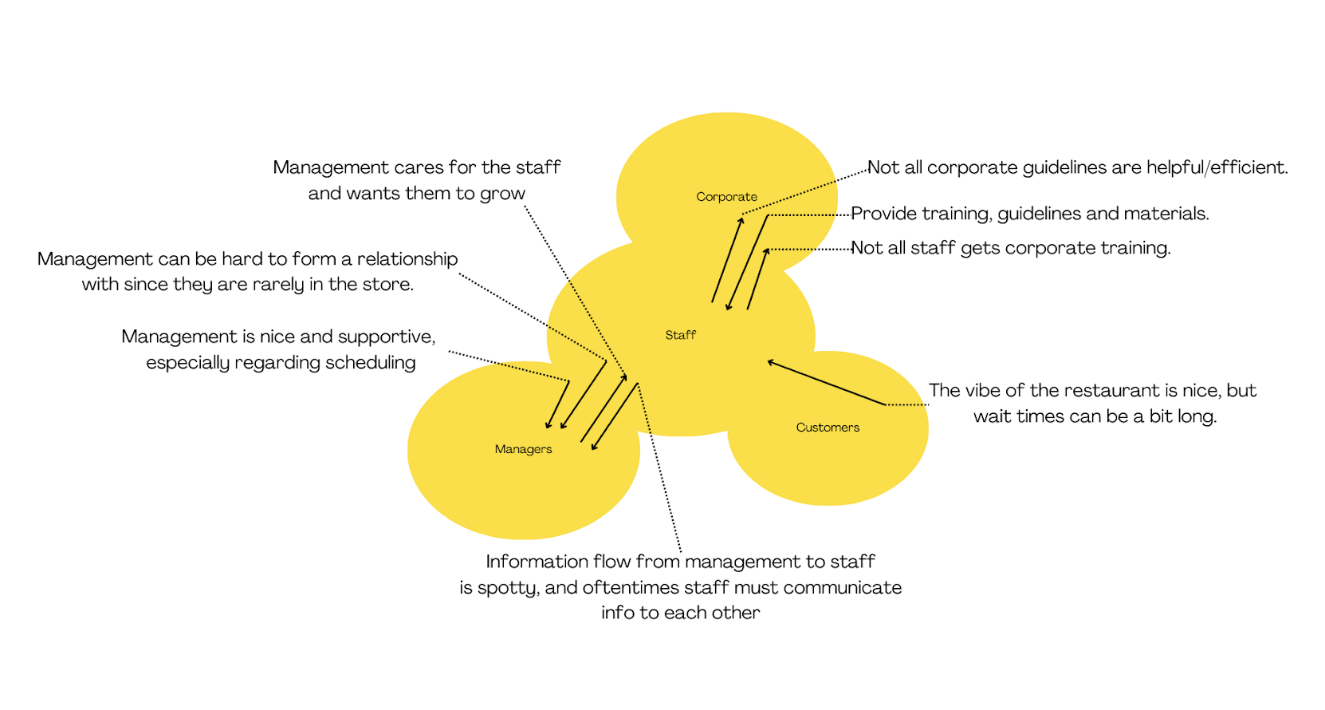
Cultural Model
We decided to create a cultural model due to there being an obvious gap in the expectations of corporate versus the reality of what is feasible for PBCH.
There seemed to be a cultural disconnect with corporate, management, employees, and customers. While management and employees have a mutual respect relationship, it was difficult for employees to explore a closer relationship with management. Additionally, we found that not all corporate guidelines given to employees and management were helpful, signaling a cultural disconnect there as well.
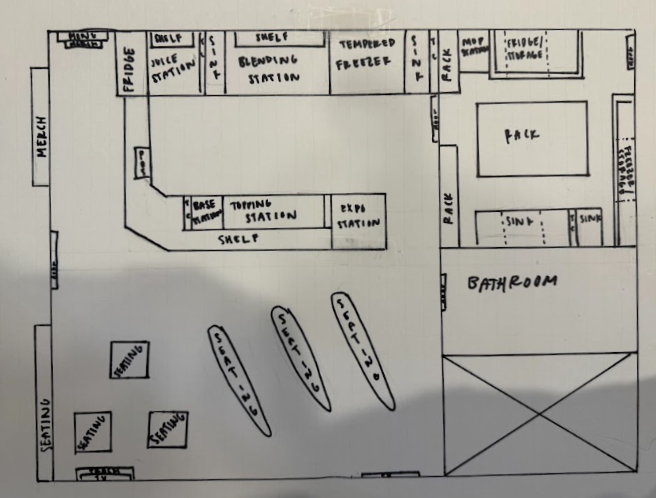
Physical Model
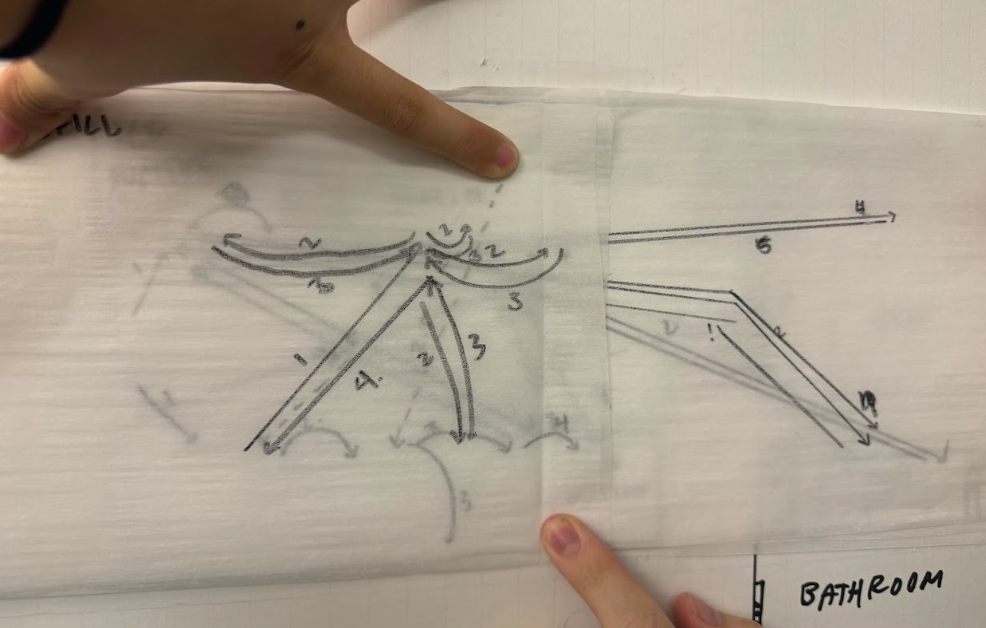
Lastly, our group created a physical model of the workspace and mapped out the different possible workflows that could be happening at any given time at the store. This is because every interview cited some issue with the workspace, whether it be inconvenience of the location of certain items in the store or lack of navigability.
There was frequent overlap of workflows and movement that indicates inefficiency in layout and where items are located in the store. This may have been a contributing factor to the cited long wait times by customers, and is noted throughout multiple interviews as being a pain point, especially during peak hours.
Validation Session: The Wall Walk
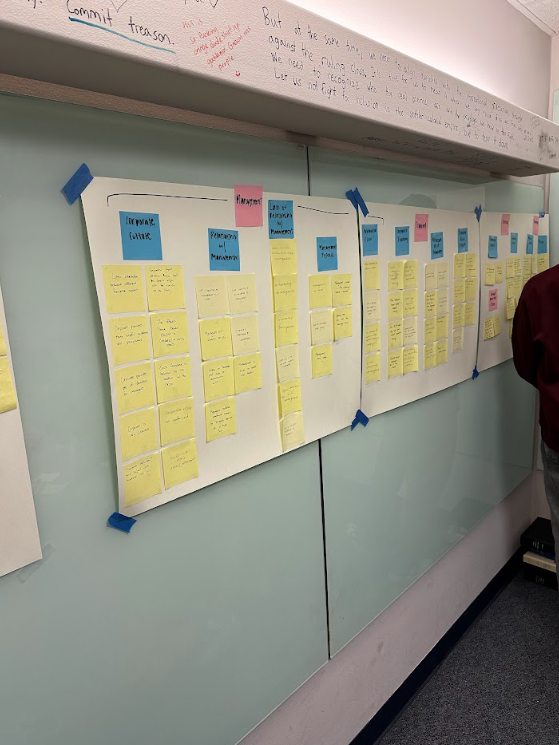
Our team conducted two seperate wall-walks: one with the store manager and one with the store owner. Our first wall-walk was conducted in-person, with the store manager viewing all of our models, marking with a pen on items she felt were incorrect about the store. In total, she marked on five total sticky-notes from our affinity diagram, in which she cited were issues that had already been fixed since the time of our interviews. Otherwise, she felt our observations were valid, in which we moved on to present our models to the store owner in a virtual meeting along with our proposed solutions.
Solution Proposal
For each of the identified issues within PBCH, we ideated recommendations in order to address each problem: the physical space, training, communication, and accountability. Since this location was new and still adjusting, some changes were already implemented with positive success.
Physical Space
To address the physical space, we recommended creating an assembly line system with each employee during the shift having a specified job, in a specific spot in the front. This would reduce employee movement, as well as the number of employees crossing paths which would help with efficiency and safety. It would also help with shift changes, where new employees starting a shift would have a clearer idea of how immediately to jump into work.
Communication
We recommend that solving communication issues should be a priority because of the ways we’ve outlined that it impacts employee culture at PBCH. The easiest recommendation to make is to formalize communication between management and employees. Hiring a store manager, Katie, has already improved this system because there is now a manager present that employees can talk to. However, creating a procedure for disseminating information about shift changes would aid employees in not feeling blindsided about suddenly being short-staffed. Publishing the full schedule consistently on a certain day, and a week in advance would give shift leads and other employees a heads-up about when there may not be a full staff. This was one of our solutions that was immediately implemented.
Training
Training was one of the recurrent themes in the interviews; many employees were able to qualify the disparity between those who had and had not gotten properly trained, with “properly trained” often meaning the full corporate training. Instead, many employees got trained by other employees during their first shift, causing a mismatch of knowledge. We recommended that new employees get proper and more standardized training by enforce the training handbook or checklist, with the manager or shift lead responsible for walking new employees through it. This would allow for flexibility during the shifts with regards to the order of content that new employees receive, but would ensure all new employees got the same information within their first three to five shifts. This was another solution that was immediately implemented.
Takeaways
Looking back on this project, I learned a lot about our process and where we could do better. I’m proud of what we achieved, and it was exciting creating my first affinity diagram. Getting the opporunity to not only learn about contextual inquiry methods, but put them into practice in an Agile-like envrionment was extremely valuable, but it’s clear there are lessons I can carry forward to improve in the future. Most importantly, I learned the importance of being able to negotiate with stakeholders in order to maintain realistic scope and goals for a project.
At the start, we set goals that were a little too ambitious and didn’t fully realize how complex things could get. Because of these issues, our scope ended up shifting and growing, which made things less efficient. Next time, I’d like to focus on setting clearer, more realistic goals right from the beginning to avoid this kind of drift. At the crux, it came down to efficient communication with both the team and stakeholders involved. In the end, this project taught me the value of setting realistic goals, and being flexible when communication doesn’t go as planned.